




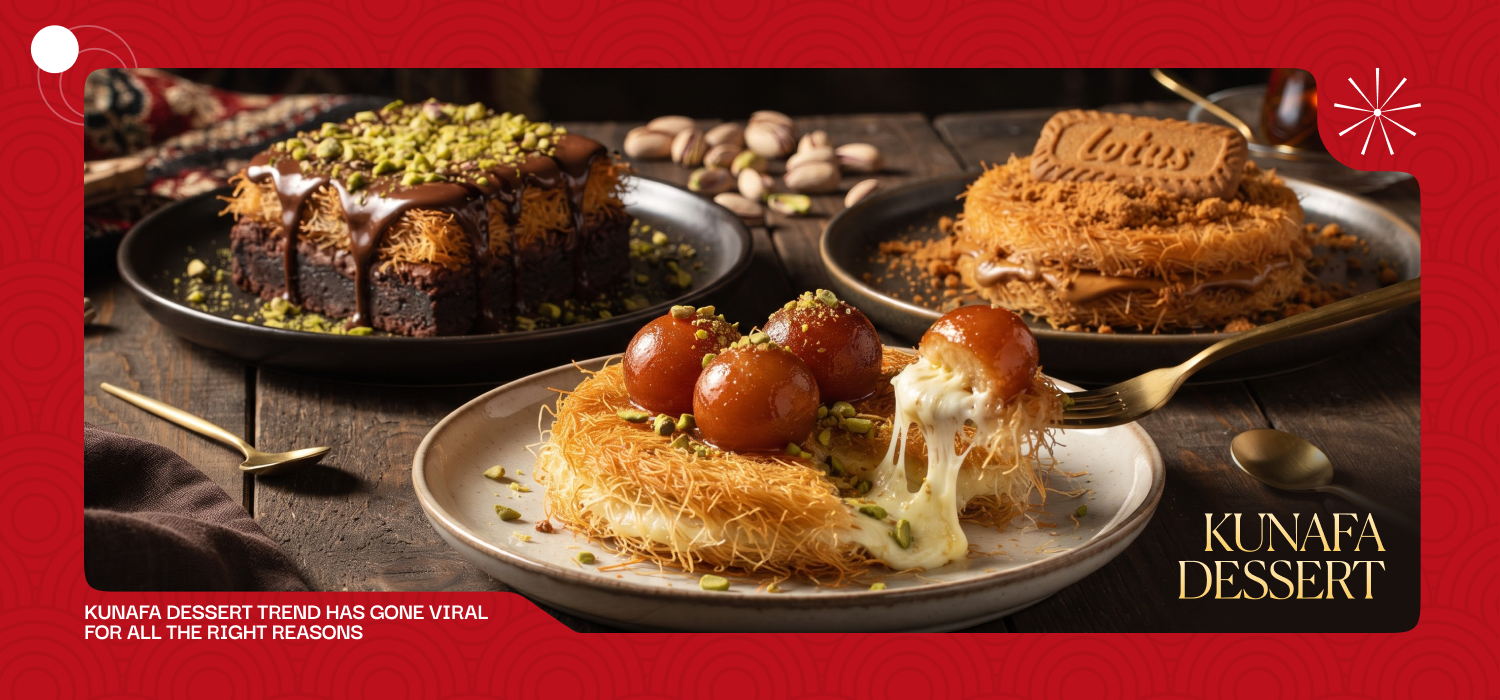
Food Creators Have Given The Kunafa Dessert A Desi Twist, And We’re Here For It
| Quick Answer A kunafa dessert is a sugar-soaked pastry made of shredded dough, usually layered with cheese or cream. It reached India through Gulf ties, first in Kerala and Hyderabad, and Indian cafés and creators now remake it with Biscoff, brownies, and gulab jamun. It’s rich. A 120g slice can carry roughly 426 calories and, by one database, about 39g of sugar, so share it. |
The kunafa dessert used to earn a blank stare in India. Now it comes with Biscoff, Oreo and KitKat.
How did a Ramadan sweet from the Middle East end up in our dessert tubs? And who’s really changing it: the cooks or the algorithm?
I cook at home, and I study food culture. My answer is neither.
The Gulf brought it, our sweet tooth adopted it, and an old Indian habit of making foreign food our own did the rest. Right now, in some corner of India, someone is serving kunafa with shrikhand in a bowl. And somewhere else, someone is referring to it as a crime.
Both of them have a point. And that’s what makes this trend fun. If you’ve ever gone down the rabbit hole of kunafa on Instagram, you’ll know that Indian food creators are not just copying Dubai. It’s a negotiation.
Food creators, home bakers, and café owners are asking what happens when a Middle Eastern crunch meets our sweet shop, and they’re answering with barfi, rasmalai, and truffles.
What Is A Kunafa Dessert, And Where Does It Come From?
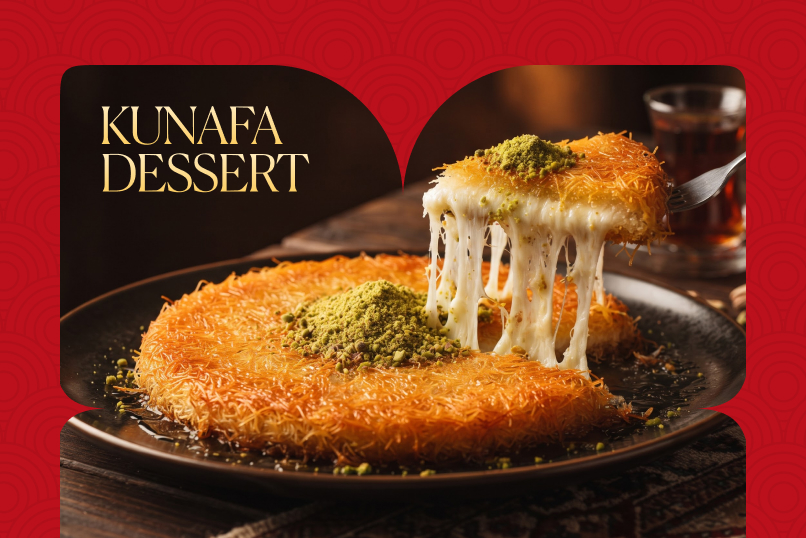
A sweet pastry dessert soaked in sugar is enjoyed in many Arab countries, as per Cadbury Desserts Corner. The most famous variation is Knafeh Nabulseyeh. This uses a warm, cheesy base covered with crunchy golden katayif (shredded pastry). The name comes from the city of Nablus in Palestine.
The origins are debated.
A popular tale states that it was created to help satisfy the hungry caliphs during Ramadan. The tale states it was created in either Fatimid Egypt or Umayyad Damascus. It was first written about in the 10th century, but historians note that the recipe may differ from the modern-day version. [Source: Wikiwand]
In the 13th century, there was a report that a market inspector rode around Damascus during the night to ensure the quality of the knafeh and other Ramadan foods.
Nablus claims to be the showstopper, with them holding the Guinness World Records for the longest knafeh. Their creation measured 74 meters long, according to Slurrp.
But when did it come to India? Only now?
How The Gulf Brought Kunafa To Kerala First

Ask Instagram, and it’ll say kunafa arrived in India around 2024. Ask Kerala, and it’ll shrug.
India’s first real kunafa pipeline ran through Kerala. Arab traders reached the Malabar coast in the 7th century in search of spices [Source: ThePrint].
The modern wave came with Gulf migration. Keralites worked abroad, came home with a taste for Arab food, and opened restaurants. Kerala Tourism lists baklava, kunafa and basbousa among the sweets at Gulf-influenced eateries.
Then Kerala did something Arab kitchens had not. ThePrint reports that entire chain outlets now sell only kunafa, in variants such as Lotus Biscoff, Oreo, Nutella, KitKat and Snickers.
That detail matters for the trend. Before the Instagram wave, a kunafa dessert was already a local menu item in parts of Kerala. The desi twist didn’t begin on a reel. It began in a shop that sold one dessert and changed the toppings.
The Hyderabad Chapter
Hyderabad has become the second place in India to call kunafa dessert its own. But Siasat’s profile of the city’s kunafa scene mentions that there was once a time when people would give you a blank stare when they heard the name.
Gourmet Baklava began in 2017 when Jordanian chef Mujahed Hasan Khader AlSaafeen came to India. While there were many desserts to choose from in India such as laddus, rasgulla, and gulab jamun, he was uncertain how his sweet treats would be received.
The brand uses Turkish and Jordanian equipment and has manufacturing in Hyderabad and Mumbai.
A new product called the Kunafa Stick was launched in Hyderabad by Gourmet Baklava and NOMME in August 2026. This is the first-ever Kunafa Stick in India.
This is a fried dessert that can be eaten on the go, similar to an ice cream bar. Hyderabadis have always had a fondness for Arabic dishes thanks to their Gulf connections. [Source: Siasat]
So, How Viral Are We Talking?
#kunafachocolate has 47,300 posts on Instagram in November 2026. #kunafadessert has just over 1,000. Although these are global tags, you can see the difference in popularity.
The chocolate version is far more popular than the traditional version. This suggests that the bars were what caught people’s attention first. T2 saw the same in Kolkata – most people found it via the pistachio bar.
Looking at orders from Instamart, between July 2025 and June 2026 in over 130 cities, there was a 11,739% increase in orders for pistachio-filled chocolate dessert.
While this is a huge increase, it probably started from very little. However, there is clearly a lot of momentum. Pastry chefs in Mumbai have voted Dubai Kunafa chocolate as their dessert of 2025 [Source: Free Press Journal]
Where The Desi Twist Actually Happens
So who’s remaking the kunafa dessert? Mostly cafés, chefs, and recipe creators. And they’re changing three things.
- Flavor: Kerala’s Biscoff, Oreo, and KitKat versions are the clearest case.
- Format: In Kolkata, cafés sell kunafa as dessert tubs, gelato boxes, and brownies, according to T2. Hyderabad has the fried Kunafa Stick. T2 adds that for many diners, the viral Dubai pistachio bar was their first brush with kunafa.
- Mithai: One recipe blog builds kunafa nests and fills them with cream, mini gulab jamuns and pistachio. It’s a small example, but it shows the instinct: take the crunch, add our sweets.
Mumbai chefs read the same signals. When the Free Press Journal asked pastry chefs about 2025’s defining dessert, several named Dubai kunafa chocolate.
Notice what stays fixed. Almost nobody changes the shredded pastry. We change what surrounds it. That’s the pattern of a dish being adopted, not just copied.
How Indian Food Creators Are Giving Kunafa A Desi Makeover
When I first tried my hand in this viral trend, I, too, like many others, turned to Instagram for inspiration. And there were a lot of options. That was when I realized that the desi food creators have this knack of giving everything a desi twist.
Food creator Shreya Joshi’s kunafa truffles shrink the bar into a one-bite gift. Shivesh’s pistachio kunafa chocolate cake goes the other way, building the flavor into a cake. There are also Kunafa chocolate cups in between. All three take a bar designed for one cracking moment and make it shareable at a birthday.
Then there’s this fusion happening – Kunafa mithai. And I am obsessed.
This is the group that made me argue with myself. Kunafa barfi. Gulab jamun kunafa. Kunafa rasmalai. Kunafa shrikhand. Purists will wince. I’d say these are the only ones that feel truly new, because they join two dessert traditions instead of dressing one in the other’s colors.
There are also creators like Rinchen, who have come up with his pantry hack.
His point is simple: not everyone owns kataifi, and not everyone wants to hunt for it. So, his solution – Bread Wala Desi Kunafa – is the kind of idea Indian kitchens do best: make it with what’s in the house.
Chef Saransh Goila has also come up with a kunafa-style basket with Emirati pumpkin aseeda. It isn’t desi tbh, but it’s a reminder that this trade runs both ways.
Apart from these, there are Kunafa-stuffed dates that work the same way, a small stuffed bite that needs no oven. And for people who want to keep their fitness in check, Digvijay Lifestyle has come up with a high-protein kunafa.
Why The Kunafa Dessert Fits the Indian Sweet Tooth
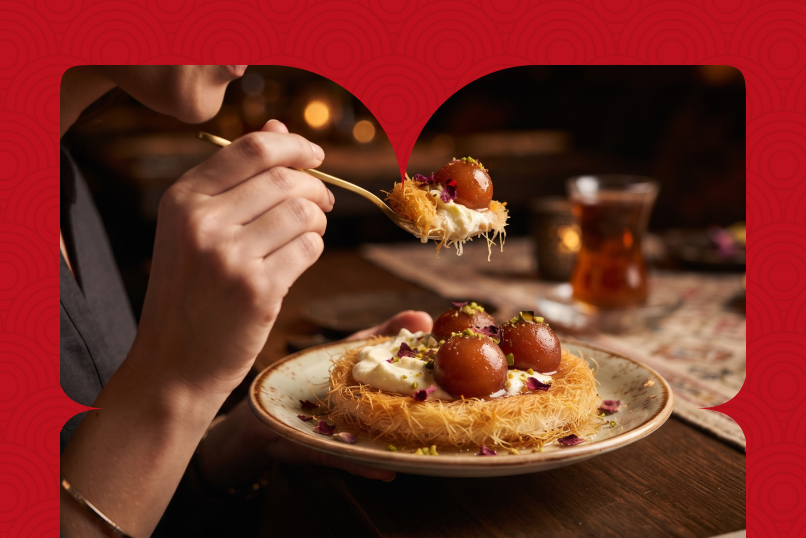
Chef AlSaafeen offers one reason. India loves sweets the way people do back home, he says, and that made his job easier [Source: Siasat]
My reading, which is opinion and not data, is that the logic matches. A kunafa dessert is dairy, fat, nuts, and syrup. So is much of our mithai. A syrup-soaked, ghee-rich sweet isn’t foreign to us. Only the pastry is.
That also explains why the “twist” feels natural. Gulab jamun in a kunafa nest isn’t a clash. It’s two syrup-soaked sweets sharing a plate.
The Sugar Question Nobody Posts About
Here’s the part I’d read twice.
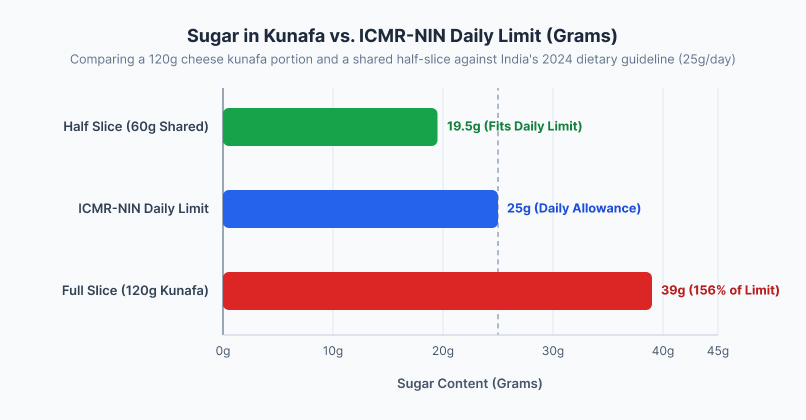
According to one nutritional database, a 120g portion of cheese kunafa contains around 426 calories and 39g of sugar. This is mostly due to the high sugar levels in the syrup. Recipes and slices from bakeries range from around 350-520 calories [Source: NutriScan].
FatSecret states a general kunafa contains 355 calories per 100g. However, chocolate and pistachio varieties will vary, so refer to the brand packaging.
Now let us compare that with Indian guidance. In their 2024 dietary guidelines, the ICMR-NIN suggests that people aged over 2 should have less than 5% of their energy intake come from sugars.
This equates to around 25g on a 2000-calorie reference diet. Although the 39g is total sugars rather than free sugars, it does show how quickly one slice can add up to your daily allowance.
I am not saying don’t eat it, but be mindful of your portions. Share it with someone and ask for the syrup on the side. If you are baking it yourself, you can control how much syrup you are using. If you have diabetes or another condition, ask your doctor what portion is best for you.
Remember one thing: Nutrition databases give estimates, not guarantees.
Is the Kunafa Dessert Trend Worth It?
Yes, and for a better reason than the hype.
This isn’t a 7-day trend. This is a Gulf dish that was brought into Kerala years ago and was upscaled by Hyderabad. It has just become popular due to Instagram!
I think what is great about this trend is that it is extremely Indian. Chefs are not replicating a dish from Dubai. Rather, they are using their creativity to adapt the taste, presentation, and desserts to make it their own.
Order the Biscoff version if you want! However, please try the stick version and create the nest with the gulab jamun. Remember, desi twist doesn’t mean light dessert!
Sources:


